

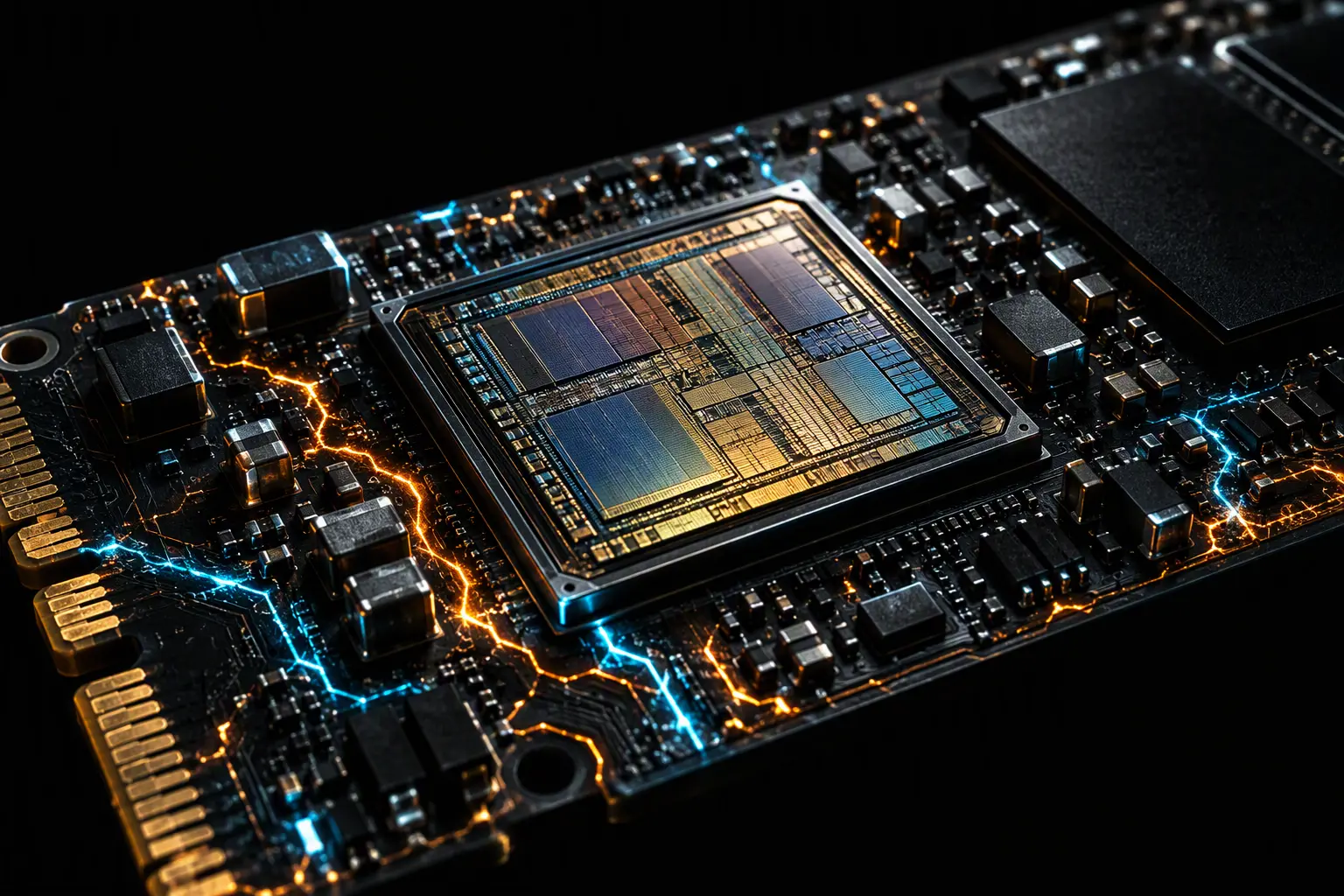
Hardware architects, enterprise systems administrators, and virtualization engineers relying on high-performance NVMe solid-state storage have encountered an unexpected hardware-level regression. The Samsung 990 PRO PCIe Flaw, recently scrutinized across the Linux Kernel Mailing List and confirmed by Linus Torvalds, exposes a failure in how the proprietary Pascal controller implements the PCIe Function Level Reset (FLR) specification. While standard client operating systems conceal the defect during routine desktop workloads, enterprise hypervisors executing direct PCIe device passthrough experience severe bus hangs, IOMMU group detachments, and silent host kernel stalls. This technical analysis unpacks the silicon mechanics behind broken FLR Immediate Readiness, audits hypervisor vulnerability vectors, and outlines kernel-level mitigations to stabilize affected storage infrastructures.
The Anatomy of PCIe Function Level Reset and Immediate Readiness
In accordance with the PCI Express Base Specification, Function Level Reset (FLR) provides an essential hardware mechanism allowing software to independently reset an endpoint (such as an NVMe storage device) without resetting the entire PCIe switch hierarchy or parent root complex. During an FLR cycle, internal registers, direct memory access (DMA) engines, and pending queues must cleanly purge their execution states to return the device to an uninitialized, secure baseline.
To accelerate device initialization following an FLR, the PCIe standard includes an optional capability known as Immediate Readiness. When an endpoint controller asserts this capability bit within its Device Capabilities 2 register, it explicitly declares to the host system that its Configuration Space is accessible immediately upon reset completion, without requiring the operating system to enforce the standard 100-millisecond Configuration Request Retry Status (CRS) polling delay.
The hardware failure identified in the Samsung 990 PRO (and subsequent drives utilizing the Piccolo controller architecture, such as the 990 EVO Plus) stems from an out-of-spec controller implementation: the ASIC advertises Immediate Readiness, but drops configuration read and write cycles immediately following the FLR assert. When the host root complex attempts to query device registers during this blackout window, the PCIe fabric logs Master Abort or Completion Timeout events, leaving the storage controller in an unrecoverable, unresponsive state.
Why Virtualization Crashes Under the Samsung 990 PRO PCIe Flaw
Bare-metal desktop installations operating on client kernels rarely encounter this issue because consumer operating systems execute FLR cycles almost exclusively during discrete ACPI power transitions (such as waking from deep D3cold sleep states). In contrast, enterprise virtualization infrastructures utilize FLR as a mandatory hardware boundary mechanism.
When provisioning high-performance storage to virtual machines using VFIO (Virtual Function I/O) and IOMMU hardware passthrough, the hypervisor enforces an FLR sequence whenever:
- A virtual machine boots and asserts exclusive ownership of the NVMe controller.
- A guest operating system reboots or initiates a soft restart sequence.
- A virtual machine shuts down or encounters a fatal kernel panic, requiring DMA isolation to prevent physical host memory corruption.
Because the controller fails to honor the Immediate Readiness contract, the hypervisor kernel encounters an unhandled bus timeout. In environments like Proxmox VE, KVM/QEMU, and VMware ESXi, this manifests as an unrecoverable kernel deadlock where the storage controller disappears entirely from the host PCI bus, forcing an ungraceful host server reboot to re-enumerate the device. Systems administrators diagnosing host-level hypervisor stalls should review our Windows error troubleshooting archive to distinguish software-level storage driver crashes from hardware-level bus disconnects.
| NVMe SSD Model | Controller ASIC | FLR Immediate Readiness | Hypervisor VFIO Stability | Primary Remediation Path |
|---|---|---|---|---|
| Samsung 990 PRO | Samsung Pascal (S4LV008) | Advertised / Non-Compliant | Unstable (Bus Lockups) | Linux Kernel Quirk (Forced Delay) |
| Samsung 990 EVO Plus | Samsung Piccolo (S4LY022) | Advertised / Non-Compliant | Unstable (IOMMU Detach) | PCIe Delay Patch / Firmware Audit |
| WD_BLACK SN850X | SanDisk 20-82-00769 | Fully Compliant | Verified Stable | Native Upstream Driver Handshake |
| Crucial T500 | Phison PS5025-E25 | Fully Compliant | Verified Stable | Native Upstream Driver Handshake |
Auditing Active Controller Capabilities via Linux CLI and Windows
Systems engineers can determine whether an installed NVMe drive advertises the broken capability directly through the command line prior to deploying production workloads.
Method 1: Linux Device Capabilities Audit
Execute an elevated lspci query targeting the NVMe storage bus identifier to inspect the raw Device Capabilities 2 register:
# Identify NVMe PCI address
lspci -D | grep -i "Non-Volatile memory"

# Query Device Capabilities 2 (Replace 0000:01:00.0 with your bus address)
sudo lspci -vvv -s 0000:01:00.0 | grep -A 5 "DevCap2:"
If the output reports Immediate Readiness+ alongside a vendor ID of 144d (Samsung Electronics) and device ID a80c (990 PRO series), the controller is operating under the non-compliant hardware baseline.
Method 2: Windows PowerShell Firmware and Device Query
On Windows workstations, confirm the active firmware revision using administrative PowerShell commands:
# Retrieve physical disk operational status and active firmware revision
Get-PhysicalDisk | Where-Object { $_.BusType -eq "NVMe" } |
Select-Object FriendlyName, SerialNumber, FirmwareVersion, OperationalStatus
Ensure that the reported firmware matches or exceeds revision 4B2QJXD7. While firmware updates through Samsung Magician resolve background wear-leveling algorithms and transient read errors, they do not restructure the physical ASIC capability registers, necessitating host-level operating system quirks.
Linux Kernel Quirk Implementation and Upstream Fixes
To prevent hypervisor crashes without requiring physical storage replacements, upstream maintainers integrated a dedicated hardware quirk into the Linux PCI core subsystem. As discussed by Linus Torvalds during kernel review, the patch explicitly overrides the controller’s advertised capability.
According to the official Linux Kernel Git Repository, the quirk table matches against PCI vendor ID 0x144d and enforces an explicit post-FLR settling delay (forcing a standard 100ms wait state) before the host kernel issues configuration transactions. This prevents the host from attempting to communicate with the unready Pascal ASIC.
For custom homelab nodes and enterprise bare-metal hypervisors running legacy long-term support (LTS) kernels that lack this quirk, administrators must temporarily disable Function Level Reset on the VFIO interface by adding the following parameter to the QEMU device invocation string:
-device vfio-pci,host=01:00.0,x-no-flr=onDisabling FLR entirely allows the drive to be passed through without triggering Immediate Readiness timeouts, although it bypasses the physical hardware reset state across virtual machine restarts. When provisioning enterprise compute clusters, review our architectural documentation on desktop and server processor architecture to verify that root complex PCIe lanes and IOMMU translation layers are configured correctly at the UEFI level.
Frequently Asked Questions
How does the Samsung 990 PRO PCIe Flaw impact daily workloads?
The Samsung 990 PRO PCIe Flaw does not degrade standard gaming, desktop application execution, or routine sequential file transfers. The hardware defect is strictly isolated to low-level bus reset cycles, primarily impacting enterprise virtualization environments executing VFIO and IOMMU hardware device passthrough.
Can a firmware update through Samsung Magician permanently fix the broken FLR capability?
Firmware updates cannot alter the hardwired PCIe Capability configuration space embedded in the controller ASIC’s physical micro-architecture. While Samsung can adjust internal boot sequencing timers via firmware, host operating systems must continue enforcing driver-level quirks to guarantee stability across rapid reset cycles.
Are other NVMe SSD models from Samsung affected by this issue?
Telemetry from kernel developers indicates that this flaw also impacts drives built on derivative controller platforms, including the Samsung 990 EVO Plus. Earlier generations based on the Elpis controller (such as the Samsung 980 PRO) comply with standard PCIe FLR specifications and do not exhibit the Immediate Readiness timeout failure.
For homelabs, remote testing, and staging environments, we run NVMe VDS instances on Erahost. Fast provisioning, European routing, and predictable I/O.
View NVMe Plans →